Showing posts with label Safety. Show all posts

Thursday, June 23, 2011

Operation Dry Water Promotes Safe Boating This Weekend with BUI Enforcement

Operated carelessly, any boat can be dangerous--but this is even more the case with high performance boats, where size, speed and power can quickly multiply the effects of a bad decision. Most responsible offshore powerboaters are aware of this, and take care to avoid the risks involved in drinking and boating; moreover, most organized events, like poker runs, have strict enforcement policies when it comes to drinking and participation.

 IMAGE CREDIT:  operationdrywater.org.

This weekend, law enforcement organizations across the country are joining together through "Operation Drywater" to raise awareness about BUI (Boating Under the Influence) promoting enforcement aimed at reducing the number of alcohol and drug-related accidents and fatalities and fostering a stronger and more visible deterrent to alcohol and drug use on the water.Curbing the number of alcohol and drug-related accidents and fatalities is key to achieving a safer and more enjoyable environment for recreational boating. According to the most recent U.S. Coast Guard statistics, Boating Under the Influence is still the leading contributing factor in fatal boating accidents, with 17 percent of boating fatalities a direct result of alcohol or drug use. 


No one wants to take the fun out of boating, or stop people from having a good time on the water. But the purpose of the weekend is to remind boaters that if you want to drink, do it after your boating day is over, or be sure to enjoy it in a responsible manner. Also be aware that drunken passengers can put themselves in danger, despite your best efforts--and they can be a significant distraction while you're operating the boat.Take care...and you'll take everyone back home at the end of the day.

Wednesday, May 4, 2011

Gimmick or Good Idea? The Stay Alive Life Jacket.

For high-speed powerboat racing or poker running, it's hard to beat the proven protection of a Lifeline jacket. Every offshore powerboater knows that Lifelines are unsurpassed for their ability to keep you alive--especially since they are built to stay on your body in a high-speed impact with the water. While they are expensive, a typical response when presented with this fact is simply, "what's your life worth?"

Nevertheless, other options are available for those on a more limited budget. Examples like the Mustang MV5600 high impact vest are available for about half the cost of a LifeLine and are claimed to be strength-tested to 100mph.

Another interesting option we recently came across may be the Stay Alive Life Jacket featured here. First of all, I would point out that for most high-speed powerboating environments, the jacket would not be my first choice; though it does appear to be well-constructed, and offers crotch straps to keep it securely on the wearer--there is no stated testing for high-impact performance, and I doubt it offers anything like the performance of a Lifeline.

Saturday, April 30, 2011

Sustained High Winds Cancel Shoot-Out at Desert Storm

LakeracerLLC has announced that Desert Storm Shootout has been canceled for 2011, due to high winds on the lake and the fact that the weather conditions may extend over the rest of the weekend. The US Coast Guard and other public safety agencies in the area deemed the conditions too dangerous for high speed operation.

PHOTO CREDIT: Citydata.com.

The local weather forecast for Sunday is the same as today; boaters on-site have reported high sustained winds with severe gusting throughout the day Saturday. Nevertheless, safety always comes first - and the decision was a good one. Even though the shoot-out was cancelled, everyone at Havasu says Desert Storm was still a first-rate event. Here's hoping a new shoot-out champion can be crowned next year--for now, JBS Racing gets to retain their bragging rights!

Thursday, April 14, 2011

The Boat License: A First Step Toward Fun on The Water

Those of us who enjoy high performance boats know it's all about fun: the fun of owning a fast boat, sharing good times with friends, visiting new places and coming back at the end of the day with lots of great memories. But the important key here is coming back at the end of the day.

It seems that every boating season is marked at one time or another by tragic stories of operators who got a little careless, didn't understand the rules of navigation, or simply never took the time to understand what it takes to operate a boat safely. That's even more important with high performance boats, because speed magnifies the dangers and makes the margin for error so much smaller.

This is precisely why having the proper safety instructions, and obtaining any required boating license is so important. Offshore performance boaters sometimes have an undeserved reputation for being reckless and rowdy - but in truth, our group has always been supportive of strong safety measures.  That includes proper training, responsible behavior and protecting our passengers with quality safety gear. Fortunately, ensuring safety on the water with solid training is easier than ever....especially with resources like BoaterExam.com

Exam Time

Those of us who are older--or who have been boating for many years--often take our boating "rules of the road" for granted. But laws and requirements can change, and it's important to keep on top of changes, so you're always compliant with state and federal regulations.

But training is even more critical for younger boaters, as most states now require younger operators to obtain a Boater License or Boater Education Card to operate a boat legally on the water. In Florida, anyone born after Jan. 1 1988 needs one. In Wisconsin, it's 1989...in North Carolina, 1985...and in Ohio, anyone born after Jan. 1 1982 operating a boat over 10hp must have a Boater Education Card [BEC].

Online training courses like those offered by BoaterExam.com are not only convenient, comprehensive and fully-approved by state agencies, they are amazingly affordable. In fact, the online study guide and chapter quizzes are FREE - you only pay when you pass the course.

Best of all, these courses are actually FUN, and they are a great way to get younger people interested in boating safety and responsible operation. I sat through local Power Squadron training prior to purchasing my first high performance boat, and while it was okay, the classes took 6 weeks, traveling back-and-forth was a hassle, and the content seemed a little dated. If I'd had a great online option like this available,  I definitely would have used it; in fact, I'm planning on reviewing the online course as a pre-season refresher.


So, if you need to get qualified as a boat operator in your state...or want to introduce a son or daughter to a world of fun and fast boating...be sure to check out a top-notch education program like BoaterExam.com.

This Sponsored safety post courtesy of www.boaterexam.com.

Saturday, April 9, 2011

Campaign is On to Increase Daytime Speeds on Lake Winnepesaukee

As we have noted before, New Hampsire's largest lake, Lake Winnipesaukee, has been the subject of much controversy since the establishment of an arbitrary speed limits of 45 mph. One group, Safe Boaters of New Hampshire, has worked tirelessly to rid the lake of these limits.

PHOTO CREDITS: Boatinglocal.com.

There is currently a bill that has already passed the State Senate that would increases the daytime limit to 55 mph. While this proposed bill doesn't repeal the limits completely, high performance boaters feel it is a step in the right direction.

The group just started an email campaign to the NH House of Representatives, and is looking for as many emails as possible to support this bill. To accomplish this task they have set up a email system on their website that will allow supporters to simply click a button to send an email to every member in the House.The goal is to to show that Boaters who use the water safely do not support arbitrary limits. Visit www.sbonh.org to let your voice be heard.


Thursday, September 23, 2010

New Activist Group Seeks to Keep Lake WinniPesaukee Open for Performance Boaters

New Hampshire's Lake Winnipesaukee is a big lake - and has been one of the Northeast's top boating destinations for many years. Over the past several years, there has been a real struggle between boaters who want to keep the lake open to free, fun and responsible boating, and zealots who have pressured legislators to enact a 45mph speed limit on this attractive and popular lake.

Now there is an Activist Group - Safe Boaters of New Hampshire (SBONH) that is working with the State of NH Legislature to promote safe boating and effective legislation. This was the group the came out in severe opposition of prematurely ending the speed limit tests and instituting a permanent speed limit. This group of avid and educated boaters is also working to support bills to allow captains call on the lake as well as increase safety by promoting inspections with the US Power Squadron and other initiatives.

PHOTO CREDIT: www.lov2xlr8.no.

The group has started their own Forum to privately discuss these future initiatives and they ask that all interested powerboaters who enjoy Lake Winnipisaukee join to show your support as well as chime in on the crucial discussion that will shape the future of all lakes in New Hampshire. Check them out here.

Monday, August 9, 2010

No. 13 Popeye's Boat Flips at Michigan City

10-year offshore racing veteran Lisa Matthews was knocked unconscious and flown by helicopter to St. Anthony Memorial Hospital after her Popeye's #13 offshore cat flipped during the SBI Great Lakes Grand Prix at Michigan City, IN this past weekend.

PHOTO CREDITS: Rob Quinn - Herald/Argus.com

Both Matthews and throttleman Stan Ware, a New Orleans native, had to be rescued by the SBI medical team after 32 minutes of racing after their boat capsized while driving 110 miles per hour. Ware escaped unscathed, but Matthews was taken to the hospital for precautionary reasons after nearly drowning. Racers agreed that rough conditions may have contributed to the crash. Ware noted that the lake had unpredictable waves, and he had taken measure to weigh the boat down prior to the race. Popeye's crew chief Wayne Courson also said that bad weather had stirred up the lake.

"I've raced the Great Lakes since the '70s, and it's always a surprise," said Ware afterward. "We went straight up (and tipped over). (Matthews) got tangled up in some lines, and I was pulling her out. We're fortunate to be here...it was a scary moment. The medical team is great. Without them, it wouldn't be like this right now."

Friday, June 4, 2010

Loaded? Or Just Overloaded? Scarab Sinks at Havasu

Memorial Day weekend always brings out the best and worst in boating, and at popular venues like Lake Havasu, it's more evident than ever. Check out this YouTube video that shows a nice 29' Scarab going down in the middle of the channel.

Though there are lots of boats around, no one else seemed to have the presence of mind to throw these guys a line and haul ass to shore. In their defense, this boat does go down very fast, and with all the boat traffic in the area, trying to jump in and save the big Scarab might have caused even more problems. In any case, it seems other boats quickly moved in to pull the Scarab's passengers out of the water after its sinking was inevitable.


How did it happen? Another YouTube video, purportedly posted by the boat's owner, offers this explanation: "Long story short, our boat sank. One of the girls puked and as they were cleaning up too many people shifted weight to the back and down she went. None of us got hurt, thank God. Never gonna forget it that's for sure."

Tuesday, May 25, 2010

Run Through a Propeller Checklist to Ensure Top Performance and Safety

Springtime is the official start of the boating season and it's also a good time for performance boaters to run through a prop check list -- because the wrong or damaged prop can negatively impact performance, increase fuel use, and lead to potentially expensive problems at the worst time: while you're out on the water.

I'm especially aware of this because I have some prop issues of my own - some minor dings that I picked up - courtesy of some unseen rocks that I drifted into last year.

PHOTO CREDIT: www.boattest.com

“Even if you don’t suspect prop damage, you should check for it,” says Brett Anderson of BBLADES, one of the country's best known full-service propeller companies. “A ding or a dent – or worse – could have occurred when trailering the boat for the final time last year, while the boat was in transit or even in storage. Look for the obvious, and then look closer for cracks that may run through one or more blades.”

Anderson suggests a magnifying glass could help locate pitting or hairline cracks that could lead to bigger problems later. He also points out that over or under propping can not only affect boat performance but also fuel economy by causing an engine to work harder.

“High engine rpm that is the result of an inefficient set-up –how high or low the prop sits in the water, or the result of a high prop slip percentage, can often be corrected by changing to a propeller that has more blades, changing the depth of the prop in the water or changing the pitch, diameter or other prop geometry,” he explains. Anderson defines “slip” as the difference between actual and theoretical travel created by one revolution of the prop.

PHOTO CREDIT: www.boatsblog.com

Racers are always focused on the condition of their props, but sometimes the rest of us may neglect to consider the importance of the propeller that's on our boat. The propeller is the final link in the boats drive train, and is the piece of the puzzle that connects the horsepower to the water...so ensuring its proper care and performance is vital. Professional prop shops like BBLADES can help a boater determine prop slip over the phone in many cases, and offers test programs to help boaters determine the right prop and the right drive height.

For more information, contact them at http://www.bblades.com - or call them at 920-295-4435.

Thursday, September 10, 2009

VIDEO: Why Every Fast Boat Boat Needs a Kill Switch...

Unless you're just putzing around the lake at no-wake speeds, it's always a good idea to have an ignition kill-switch and a lanyard installed on your boat. This is one of the first things any high-performance boat owner should look into, because if you are hitting the waves at any kind of speed, bad things can sometimes happen. This is especially the case if you are a new and relatively inexperienced boater.

This video picks up at Stuart Inlet, FL, after the driver and his two passengers have already been thrown off their center console boat. This is not necessarily a high-performance boat - but it's obviously fast enough to cause trouble for an inexperienced driver. Another boat is running alongside, and the YouTube poster (jeremyglass86) is taking the video:

"...another boat picked up the boat owners and we rode along side, radioed the coast guard, and made sure no one was hurt. "


Thankfully, the folks on the "chase boat" did the right thing - while it might be tempting, it would be very foolish and dangerous to try and get on board a boat moving across the waves at speed. The lesson here is simple: Use a kill-switch and lanyard, which will shut the boat down immediately if you fall or get ejected from the boat for some reason. Without one, your boat just becomes a guided missile that's been let loose to destroy or damage property, or even worse--hurt someone. Not to mention the damage to the boat itself, which could be avoided.

Thursday, July 9, 2009

When it Comes to The Sun, Even a Man Has to Know His Limitations...

We all dig the sun, and boaters have to deal with it all the time. We've talked about how important sunglasses can be for protecting your eyes, but it's a pretty good idea to look after your skin as well - and that's where a decent sunscreen comes in handy. Whether your Mister Pale-Freckles or Mr. Road Construction Tan, it's a good idea to use something on your skin - at least at the start of every summer season. Burnt skin doesn't look good or feel good; and nobody wants skin cancer, so it's best to play it smart and use an adequate level of protection. Here's some things to remember for guys:

The skin is also an excellent accountant -- every moment you spend out in the sun adds up slowly -- like money in the bank. Unfortunately, the payoff down the road may be potential skin damage in the form of wrinkles, hyperpigmentation (okay, dark spots) and premature ageing...as well as the potential for skin cancer, which can be very serious.

Defend yourself the easy way by limiting exposure to the sun and protect the skin with sunscreen. Don't forget the top of your head (especially if you're shaved, bald or your hair is thinning) can be protected with a hat. Keep a baseball cap or panama hat handy and wear it every once in a while.

All sunblocks guard against UVB rays to stop your skin from burning and most also block UVA2 rays. Look for products which contain Avobenzone (Parsol 1789) to ensure your skin has the best protection against damaging sunlight. You're not a baby - so a lower level of protection (SPF4 or 8) might be good enough, unless your skin is really sensitive.

Men are particularly vulnerable to sun damage after shaving. Two to three layers of skin are shed when you shave, and that leaves skin more sensitive to the sun. This shouldn't be a problem, since a lot of you guys never shave on the wekends anyway...

Avoid alcohol-based aftershave prior to sun exposure -- this can lead to hyper pigmentation spots appearing on your skin (think liver spots, but not permanent).

Me, I go with the classic Coppertone SPF 4. Gives me all the protection I need and no other smell says "beach" better than this stuff. In fact, it's even a pretty good after-shave, except that the smell doesn't last that long. It keeps your skin from drying out and it's non-greasy, too -- so I don't have to worry about a beer slipping out of my hands when I'm relaxing on the dock or at the local waterside tiki bar.

BTW, I didn't notice till after I posted it that the blonde in the Coppertone ad is actually Sharon Tate. If you don't know who that is, then it doesn't matter...

Wednesday, June 24, 2009

Your High Performance Boat is Not a Toy

If you've never owned a high-performance boat before, you probably spend a lot of time dreaming of smooth, high speed runs down a sunny lake, sitting at the docks with your friends soaking up the sun, or roaring down the bay with other boaters in a thrilling poker run. Eventually you might get that boat - and then reality sets in.

The lakes and bays aren't always smooth--or they may not stay that way for long. Or, you find the speed exciting, but also a little bit unsettling...because it's an unfamiliar feeling and you're not quite sure what the boat will do next. You also might find launching and docking to be more of a challenge than you expected -- especially if you're alone, and your boat is fairly large. This was my own experience - and I'm sure it's not that uncommon. The question is, what can you do about it?

Most experienced boaters will tell you that there's just no substitute for "seat time" -- just getting in the boat, seeing how it reacts to various situations and conditions, and seeing how you react as well. I've found my own docking skills are getting better with practice, and your confidence should grow as well. But there is a good way to accelerate your improvement and increase your skill--and that is to take a performance boating training course.

Tres Martin's Performance Boat School is probably the best known of these programs, and any graduate will tell you that the tuition is money well spent in terms of boosting your confidence and safety behind the wheel of your boat. Instructors Tres Martin and Brad Schoenwald will help you understand how your boat will react in various situations, show you the proper techniques for maximum control and safety, and get you behind the wheel for practical, hands-on training. They offer two basic courses:

Performance Boat Course
Designed for single engine catamaran and V bottom boats running less than 75 mph, this course teaches you hull design, how steps work, proper trim and tab positions, turning techniques, recovery techniques, defensive driving, safety equipment, docking, trailering, maintenance, trip pre-check, safe following distance, places you cannot turn and how to handle all water conditions at speed. It's a full day course with on water skill based training.

Ultra High performance Course
This is the gold standard of performance boating course, where you are personally guided through advance skill training and terminal performance objectives required to safely operate faster boats. Designed for multi step V Hull and Catamarans that operate at speeds above 75MPH, this course covers safety issues, step hull v bottom design, cat hull design, trim settings and tab settings for all water conditions, places you can not turn, tab abuse, new five step turning protocol, recovery techniques, docking, maintenance, trailering, defensive driving maneuvers. A one and half day course with on water skill based training, it really is a must have course for ultra high speed performance boats.

PHOTO CREDITS: Tres Martin's Performance Boat School

The standard price for the Performance Boat Course is $1500; the Ultra High Performance Course is $2500. That might seem like a lot, but you get hands-on training by experienced pros that could actually save your life or protect your boat from serious harm. After every course, each graduating student is given a certificate of completion, and this certification is recognized or required by major insurance companies in the US. Not only will you be a safer and more confident boater, it's reasonable to expect that your improved skills will allow you to enjoy every trip out on the water a lot more. There's still time to enroll in a course this summer - remaining dates are:

July 2-3 Long Beach CA.
July 8-9 Thousands Island NY
July 16-17 Chicago

July 23-24 Toledo OH


To find out more about the course and the school, head over to www.performanceboatschool.com

Wednesday, June 17, 2009

Hey - Where's Summer? Many Boaters Wondering.

From amateur science bloggers to experienced meteorologists, there's been a low, growing rumble over the past few weeks about the possibility of a "year without summer." That phrase actually goes back to 1816, when we actually DID have such a year - when temperatures over the northern hemisphere seldom exceeded 50 degrees and Pennsylvania lakes actually froze in Mid-July. Of course, that well-documented phenomenon was reportedly due to the eruption of the super-volcano Tambora, in Indonesia - and while there's certainly been a lot of talk about climate change - that's supposed to be global warming. What's up? This video from NBC Nightly News takes a look at what's happening:


You can already find threads in most of the offshore performance boating forums where members have been expressing their frustrations about the cool temperatures, from the Minnesota and Northern Michigan to New England and the East Coast. While the weather on the south shore of Lake Erie has been pretty decent so far, we're still waiting for more heat and humidity. Thankfully, if this NBC report is correct, what we're seeing is just a blip on the weather radar that will be a memory by the time July gets here. Let's hope so.

Tuesday, June 9, 2009

World Rally Car Driver Helps Rescue Boaters in Norway Poker Run

On land or sea, racers are a special breed, and that was proven again last weekend when World Rally star Petter Solberg helped save the lives of two powerboat racers while participating in last weekend’s Poker Run Powerboat Festival in Norway. Solberg was entered in the event on behalf of his boat-building sponsor Johs Lunde, when another boat flipped and rolled over right behind him.

The 2003 World Rally Champion described the crash as pretty frightening: “I saw the crash in the mirror and knew it was serious straight away,” Solberg said. “The boat had turned over and was effectively on its roof. I turned around and went back flat-out, I was first on the scene. Some people were out of the boat already, but there were two more trapped. My co-driver jumped in the water to help and I followed. It was a really bad situation.”

The driver and throttleman, who had been secured in the in the upturned boat by their seat belts, were assisted by Solberg, his co-driver and others who arrived on the scene immediately. Three of five people involved in the crash were hospitalized, but all are expected to recover.

“All that matters is those guys are going to be OK," said the racer. "It was the most frightening thing I have ever seen. I’ve seen accidents on rallies, but when you arrive and a five-ton boat is upside down with people still in it, it’s terrible. The water was just so cold. I was in the overalls and the boots and everything, and after some time in the water I just couldn’t feel anything. I came close to fainting, it was really bad. But, like I say, they’re going to be OK and that’s all we all care about.”

FROM WIRE REPORTS & RACER.COM

Wednesday, May 27, 2009

New Gear Makes Docking & Trailering Safer

BIGGER & BETTER THAN A FENDER
I'll be the first to admit it...my docking skills still leave something to be desired. While I have no shortage of fenders, it always seems that the side of my boat and the dock will always meet somewhere in-between them. Of course, I can always "buff it out" -- but I can't help but think that there's got to be a better way.

Well, the folks who developed the the Dock Torpedo might have the answer. This inflatable fender system provides extended protection in situations where ordinary fenders just aren't up to the task, for example--at piers with external pilings, or when water levels are lower than normal. With a full 10 feet of protection, it's great for any go fast owner who wants to ensure that nothing damages their beautiful hull finish. You simply inflate and attach the Torpedo to your boat or the pier with the four durable 8-inch straps. When you're ready to hit the water, you just deflate the unit and stow it, since it folds flat.

While the price ($395) isn't cheap, it can save you a lot of painting, buffing and touch-up work later. The Dock Torpedo (TM) provides superior, yet portable protection for your watercraft investment; two would probably be perfect for most poker-run size boats. The Boston-style valve provides a wide variety of inflation options and the quick-release deflates the unit in just a few seconds. Among other features:

- 10' long x 1" diameter fits most boats
- Boston valve accepts most inflators
- Removable .90mm welded PVC bladder
- Rugged .20mm UV resistant cover
- Four 8' mar-resistant mounting straps

To find out more, contact LakeTek, LLC; (262) 255-4047; or on the web at www.laketek-llc.com

PROPER PROP PROTECTION
High performance props cost big money, so it's critical to protect them. And clever props? They are damn sharp - and downright dangerous in and out of the water, if you're not careful around them. DriveSafe H2O is an innovative, all-purpose protector for your prop and drive, providing solid area protection from minor rear-end collisions and theft, while preventing potential prop injuries when the boat is on the trailer. An easy-to-operate electronic actuator allows simple movement up and down, so there’s no interference when launching or loading. Once your boat is safely in the water, you simply disengage DriveSafe H2O, and off you go.

Pricing varies by model and features, but start at about $899. DriveSafe offers a rear-light, customizable side panels for added protection, and can also be ordered in custom colors and with a locking mechanism. Available in steel, aluminum or stainless steel, the units are built with TIG-welded tubular frames. Currently, DriveSafe H2O applications include V-Hulls and Cats with single or twin I/O or jet drives. To find out more, contact Drive Safe H2O; (909) 618-8569; or on the web at www.drivesafeh2o.com

Friday, April 24, 2009

EYE TECH: Sunglasses for Performance Boating

Go into any outdoor, sporting goods, or even the corner gas station, and chances are you will see all kinds of sunglasses arranged on the counters and on display racks. Although sunglasses are usually sold like fashion accessories, with a big focus on style, they are much more important than that - and even could be said to perform as a medical device. Why? That's because sunglasses are essentially designed to protect your eyes from possible damage as a result of over exposure to the harmful rays of the sun, as well as other sources of intense light. When you're out on the water, a quality pair of sunglasses will make a big difference...not only in the long-term health of your eyes, but in overall vision and safety.

So - how do you select a pair of sunglasses that will suit your needs? There are some basic ways that sunglasses help protect your eyes, so keeping these facts in mind will help ensure that you've made the right choice.

First, Polarizing sunglasses provide you with basic protection from sun glare. Polarizing sunglasses are especially popular with boaters, because the water reflects back a great deal of sun, which makes it hard to see and tires the eyes out. The glare can be distracting and dangerous, since it can make some objects (logs in the water, rocks and even other boats) hard to see.

Secondly, a good pair of sunglasses protect your retinas from light that is too intense, and which, over time, causes the iris to become less effective--almost "shutting down." This is why the body has a natural reaction to "squint" when exposed to light that is too bright. This can be hard on your retinas, and can even lead to permanent damage.

Third, a quality pair of sunglasses protect your corneas from the sun's ultraviolet rays. Over exposure to the sun's Ultraviolet rays can lead to a number of serious eye conditions and diseases, so always look for a sticker or tag that guarantees a good degree of UV protection.

Last of all, depending on how they are tinted, some sunglasses will filter out or enhance certain specific frequencies of light. Sunglasses which do this can enhance the contrast between the lights, shades and colors--and sometimes make objects easier to see, or appear sharper to the human eye.

So there's more to picking out the right pair of sunglasses than just good looks. While a great looking pair of sunglasses like some Oakleys, or the billet-type examples pictured here - Grix (top) and and Gatorz (bottom) - can cost a couple of hundred bucks, you don't have to pay an arm and a leg for solid protection. Another thing you might want to invest in is a lanyard, to keep the glasses around your neck. Last year, at the dock, I had taken off a pair of sunglasses and momentarily hooked them into the front "v" of my shirt. Of course, as soon as I bent over to untie a line, they fell right out and into the water. They did not cost a lot, and I didn't feel like jumping in to recover them, but that was the first and last time that happened. The next pair were attached to a lanyard.

Thursday, April 23, 2009

JBS Racing Hits Some Hard Luck in Miami

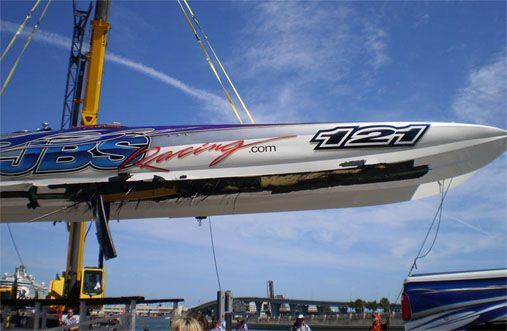
Just a brief update on the JBS Racing Team, whose video we featured a couple weeks back. Apparently they ran into some bad luck at the Super Boats International (SBI) Miami race last weekend. According to owner Jeff Stevenson:
"We had reports of a small delamination that never got worse until the last lap, and not a few seconds later experienced heavy vibrations and an explosion of water through the driver's side of the boat ending our race. Nobody was injured."
PHOTO CREDIT: NAPLESIMAGE.COM

Thankfully speeds at the time were well below the near-200mph seen on the video. For those who are unfamiliar, delamination is a process where the various construction layers of the boat begin to separate. In most cases, it does not result in a catastrophic failure, but at the high speeds and high stresses involved in offshore racing, more serious damage--likethat seen here--is not out of the question. According to official team reports, both driver and throttleman were aware of the initial damage and had made a calculated decision to try and complete the race. As the damage increased during the course of the race and eventually appeared on the "running surface" of the boat, a more serious breach occured, which began to fill the boat with water. A calm shut-down and quick recovery made it possible to get the boat out of the water and up on a crane. Joh Cosker at Mystic Powerboats (the manufacturer) has made an in-depth study of what happened and is recommending some upgrades and design revisions to make the boats safer and more advanced, including some safety shields on the rigging holes in the structure.

Thursday, April 16, 2009

Ocean City Races to be Closer to Beach

In response to comments that last year's race were a little difficult to see, the organizers of the 2009 Geico Triple Crown Offshore Races in Ocean city are moving a section of the course about 200 yards closer to beach. As a result, the United States Coast Guard has taken on the responsibility of keeping swimmers out of the water during the event, which is set for May 30-31.

PHOTO CREDIT: Amsoil Racing Team

Last year's race brought huge crowds to watch the the boats tear their way through a course that was approximately 880 yards offshore. But many of the spectators complained that the boats were too far away to be seen. This year, race organizers will be moving the southern section of the course about 200 yards closer to the beach, which should help.

"People just can't see it that far offshore," organizer Ed Smith told the Ocean City Council on Monday. "Even the TV stations have to bring in monster cameras." In terms of length, the course runs approximately from Sixth Street to 34th Street, but the portion that will be moved in closer to shore runs from Sixth Street to 22nd Street, where the racers will be making a turn.

PHOTO CREDIT: E-How.com

The Boardwalk Development Association and the Hotel-Motel- Restaurant Association and Boardwalk merchants in that area were very supportive of the move, which should benefit the thousands of people who turn out each year to enjoy the race. With the boats coming that close to shore, the organizers had asked the council to close the water off completely during the race, in case of an emergency, but City Solicitor Guy Ayres explained that the council does not have this authority. The Coast Guard does have this authority, however--and will be taking steps to ensure that swimmers do not go into the water during the race.

"I can't imagine there would be many people in the water that time of year anyway," Council President Joe Mitrecic said of the May event. Ocean City Beach Patrol Lt. Ward Kovacs said that lifeguards would also be on hand to keep swimmers out of the water and alert beach visitors to any possible dangers, should a boat lose control and come ashore. Don't laugh...it's happened before!

Monday, March 30, 2009

Safety on The Water: Always a No. 1 Priority

Maybe you just bought a new boat...or a late-model performance boat that's just "new to you." You take a few minutes to check things out...count the life vests, check for a fire extinguisher, test your VHF radio...but are you really prepared for the worst, if it should happen? The fact is, there are a lot of items in a performance boat that need to be checked out--even things like anti syphon valves, Coast Guard approved fuel pumps, tanks and even electrical wire can sometimes make the difference between life and death. In many cases, these are not luxury items or safety bonuses. Having them is the law.

In addition. many or most insurance policies specify that your vessel meet all USCG specifications. Properly reviewing your boat's rigging could save your life or prevent an insurance claim from being declined. And don't assume that because a boat is "as shipped" automatically means that it is in full compliance. There have been boats which have won a lot of praise from magazines over the years, that if fully inspected, would not have met USCG specifications. Areas like bilge blower hose routing, operational lights being out, not having 100% ignition-protected components--these are often overlooked. And that doesn't even include common mistakes, like the failure to have required safety items like flares, flags, personal flotation devices (PFD's), throw lines and other equipment.

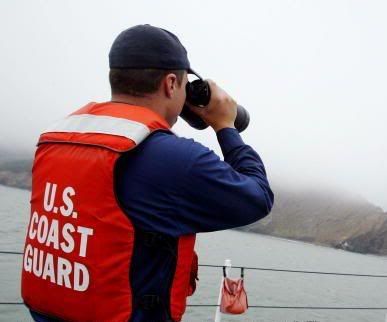
PHOTO CREDIT: United States Coast Guard

The good news is, there's plenty of help available that will help ensure your boat is ship-shape when it comes to safety. In many areas, local organizations like the local Marine Power Squadron or USCG Auxiliary will provide free boat inspections at the beginning of every boating season. Also, you can access the USCG boating safety regulations online HERE. Most of the information can be downloaded in PDF format, from vessel requirements and safety rules to navigation rules and state/federal boating laws. In fact, just about everything you need to know about safe boating can be found on the USCG boating safety site. Other great sites for safety information can be found at places like the Atlantic Maritime Academy website, which features a number of helpful and informative articles on seamanship.

And while you're at it, if your new to boating, be sure to take an approved boating course before you leave the dock; for younger boaters, it's a requirement but even older folks who are new to the sport, or who have not operated a boat for some time should take the time to learn or re-learn the basics. You--and your fellow boaters--will be glad you did.

Wednesday, February 18, 2009

The Famous Russian "Ghost Boat"

Or better known as "this is what happens when you don't use an ignition shut-off and a lanyard on your boat." For those of you who may not know, a lanyard is a device that will automatically shut the engine(s) down if you happen to leave the drivers seat for any reason. Usually attached to your life vest, the lanyard essentially works the same as those on a jet ski.

The device is simple, easy to install if you don't have one, and can help you avoid all kinds of tragic consequences due to a runaway boat. Even in larger boats, it's always possible to hit someone else's wake, encounter an unexpected wave, or be required to make a sudden and unexpected maneuver. Watching this video, it looks like an inexperienced pilot tried to take way too sharp of a turn at speed--with the result that the boat went one way, and he went the other.


As you can see, this is a pretty decent-sized boat; clearly more than the skipper was prepared to handle safely and responsibly. We assume he made it back to shore, though he is extremely lucky the boat did not hit anyone or anything else except the rocks on the shoreline. Without a lanyard, your boat essentially becomes an unguided missile should physics cause you to leave it for any reason.

Even though my own 26' Formula is not that fast, and has a hull that's known for stability, I'm still having an ignition cut-off system and lanyard installed this spring before I take it out on any big water, like Lake Erie.

Search [B3], Links & the web

  © Blogger templates ProBlogger Template by Ourblogtemplates.com 2008

Back to TOP