Showing posts with label Navigation. Show all posts

Tuesday, June 21, 2011

Team TDI Clean Diesel takes on NYC to Bermuda World Record

Chris Fertig from TDI Clean Diesel has announced that they will be attempting to break the world record time between New York City and Bermuda, using a 37' Statement Center Console (see below). As part of Boating Magazine's Bermuda Challenge, the basic rules of the run are simple: the boat must be trailerable, less than 40’ in length, and the 780 mile trip from the Statue of Liberty to St. Georges, Bermuda must be made without refueling.

PHOTO CREDITS: Boating Magazine.
The challenge was first met in 1996 by Larry Graf in his Glacier Bay 260 Canyon Runner with twin Honda 90s. Running time from North Cove Yacht Harbor at the World Financial Center in New York City to Bermuda, off Gates Fort, was 37 hours. The current record, set by Neil Burnie in a 306 Prowler back in 2002, stands at 22 hours and 23 minutes. "

Team TDI will be streaming live video and audio to the web during the run," says Fertig, "So you can cheer us on as we make our way across the gulf stream, through the Bermuda Triangle towards the finish line in St. Georges."

To see more pics and read more about the challenge, check out Boating Magazine's Bermuda Challenge web page.

Sunday, June 19, 2011

VIDEO: Malta 2011 Ocean Grand Prix - OnBoard With Nigel Hook

Last weekend's Malta Grand Prix of The Sea Enduro Class was handily won by the #33 Furnibo boat, garnering them 20 championship points and a winning time of 00:39:43:80. For an interesting take on this recent race and the course, check out this YouTube video featuring the newest U.S.-built Lucas Oil boat, with an excellent running commentary by Nigel Hook.


The commentary is especially insightful as Nigel speeds through the course, explaining the methods involved in maneuvering around the bouys and negotiating turns effectively at approximately 100mph. It's very interesting to watch an expert in action, calmly providing the details about what would be a "white knuckle" ride for most people. Job well done!

Video courtesy of oceangrandprix.com

Monday, May 16, 2011

Boating at Night: Danger Lurks in The Darkness

If you've ever been out on a boat at night, you have to admit there definitely can be something special about it...especially if you're cruising slowly down a quiet lake. Like the old postcard image below depicts, it's an image full of romanticism and mystery; even today, I can remember coming home to our vacation cabin in northern Michigan at night on my dad's rented fishing boat. You watched the old houses and cabins pass by along the shore and wondered what people were doing inside...saw flickering campfires near the docks...occasionally hearing screen doors smacking shut, off in the distance.


Of course, we were just puttering down the lake at about 5 miles per hour, and I'm sure that made a big difference. I'm sure the location did too - for cruising home on a calm lake at night is much different than making your way down a busy ocean bay or river at night, with more traffic--including larger boats, commercial shipping and barges, bridges to dodge and any number of other hidden hazards. Whatever you're in or wherever you boat, it's clear than night boating is a different animal, and requires a much more measured and careful approach than typical daytime boating.

The Day After

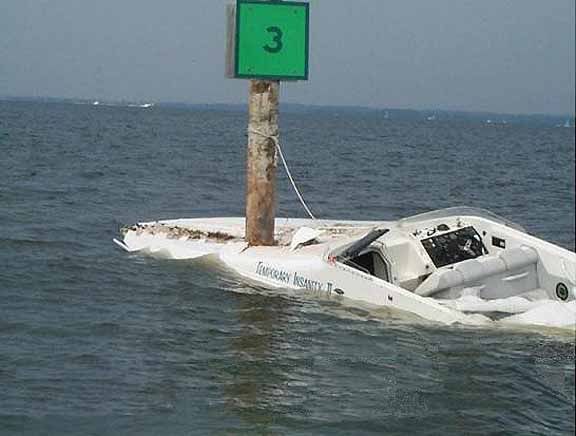
You've all seen them - and they tend to stick in our minds because they look so strange: the news photos of powerful boats high up on the rocks, or planted somewhere in the woods onshore after a boater got careless at night. We all look and wonder - how in the hell did they do that?

PHOTO CREDITS: missoulian.com.
Often, the first thought goes to drinking, and that's not a surprise; it is the cause of many boating accidents. and the ones where it plays a role often get the most notoriety. But it's often just plain carelessness, disregard for the dangers at hand, or failure to understand how the darkness can play tricks on our vision that result in tragedy.

This came to mind with an accident I read about within the last week. A guy puts his 30' offshore boat onto the rocks with fatal results to him, but thankfully not his two passengers. One passenger claims he had not been drinking, but the post-mortem blood alcohol results say he was past the legal limit. The same passenger also said the driver had removed his contact lenses, and was having trouble with his vision. To further add to this recipe for disaster, the authorities estimated that the boat was traveling at approximately 65 mph when it hit some "rip-rap" - the rocks that are often pushed up around piers and bridge pilings to help combat erosion. Again, one of the passengers says the boat was only going 35 mph. I say: Does it matter?

35 mph is plenty fast enough to get you killed. A lot of boaters I've talked to refuse to even get their boat up on plane at night; they slow speeds so they can hear and react to what they can see--because at night, there are a lot of things you can't.  

Wednesday, November 10, 2010

Livorsi Debuts Newest Guages & Controls

Industrial Series Gauges
Designed for day-in, day-out performance, these no-nonsense gauges outlast are built to perform anything else on the water. They feature fade resistant powder coated pointers; SAE rims in a powder coat finish or in polished stainless steel. The gauge line up includes pressure, vacuum and temperature gauges, with diesel and gas tachs also available.


PHOTO CREDITS: Livorsi Marine

Plug-in connectors are waterproof and resist salt corrosion; Red LED backlighting provides easy viewing in low light conditions, and the SAE rim can be selected in your choice of Black, White or Polished Stainless Steel.


Vantage View®
Vantage View® reads and displays your boat's performance data directly from CAN (Controller Area Network) for protocols: Smartcraft®, SAE J1939, NMEA2000® Indmar and MEFI4. The Gauges are completely digital, with an analog face. In addition to factory set warnings, 15 alarms can be set to your individual preferences. Each triggered alarm gives visual warnings in the corresponding gauge (via LED warning light) and the Master Tach LCD. Vantage View® Gauges are linked with Deutch connectors and plugs for easy installation.


Other New Products:

New! Pull-Up Cleats
These feature a mounded base designed to allow water to run off the cleat, eliminating the need for drainage cups or hoses. Made of marine grade 316 stainless steel for strength and a polished finish for a long lasting shine. Available in three sizes: 4 1/2", 6", 8". Easy to install.

LED Pop-Up Bow Light
The LED Pop-Up Bow Light houses both port and starboard navigation lights in one convenient 316 stainless steel housing. Folds down flush when closed, opens with the push of a finger. LED lights draw very little power and stay cool to the touch. USCG approved for 2 nautical miles. Optional waterproof cup for water runoff.

New! Stainless Steel Mushroom Cleats
Secure your fender lines to these mushroom cleats. For fresh water or salt water conditions. Easy installation, requires 3/4" cutout, 2" overall. Stainless steel with a polished finish.

Monday, March 30, 2009

Safety on The Water: Always a No. 1 Priority

Maybe you just bought a new boat...or a late-model performance boat that's just "new to you." You take a few minutes to check things out...count the life vests, check for a fire extinguisher, test your VHF radio...but are you really prepared for the worst, if it should happen? The fact is, there are a lot of items in a performance boat that need to be checked out--even things like anti syphon valves, Coast Guard approved fuel pumps, tanks and even electrical wire can sometimes make the difference between life and death. In many cases, these are not luxury items or safety bonuses. Having them is the law.

In addition. many or most insurance policies specify that your vessel meet all USCG specifications. Properly reviewing your boat's rigging could save your life or prevent an insurance claim from being declined. And don't assume that because a boat is "as shipped" automatically means that it is in full compliance. There have been boats which have won a lot of praise from magazines over the years, that if fully inspected, would not have met USCG specifications. Areas like bilge blower hose routing, operational lights being out, not having 100% ignition-protected components--these are often overlooked. And that doesn't even include common mistakes, like the failure to have required safety items like flares, flags, personal flotation devices (PFD's), throw lines and other equipment.

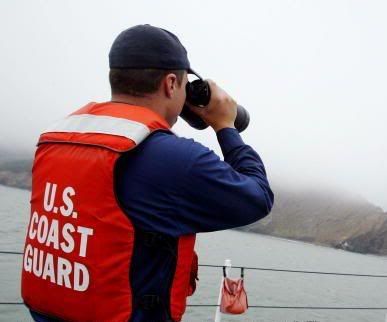
PHOTO CREDIT: United States Coast Guard

The good news is, there's plenty of help available that will help ensure your boat is ship-shape when it comes to safety. In many areas, local organizations like the local Marine Power Squadron or USCG Auxiliary will provide free boat inspections at the beginning of every boating season. Also, you can access the USCG boating safety regulations online HERE. Most of the information can be downloaded in PDF format, from vessel requirements and safety rules to navigation rules and state/federal boating laws. In fact, just about everything you need to know about safe boating can be found on the USCG boating safety site. Other great sites for safety information can be found at places like the Atlantic Maritime Academy website, which features a number of helpful and informative articles on seamanship.

And while you're at it, if your new to boating, be sure to take an approved boating course before you leave the dock; for younger boaters, it's a requirement but even older folks who are new to the sport, or who have not operated a boat for some time should take the time to learn or re-learn the basics. You--and your fellow boaters--will be glad you did.

Friday, March 6, 2009

No Speedo? Use Your iPhone...

It's a situation that's probably happened hundreds of times. I was on the lake, gradually applying more throttle as I moved out of the no-wake zone. I was getting up to speed, and just got the trim tabs adjusted to bring the bow down nice and level...and then I started applying more throttle. Soon, the Formula was moving along nicely, it's hull slicing right through the light chop, and I watched the houses on the shore start passing by faster and faster. Wow! It sure FELT fast. Then I glanced down at the instrument panel: the speedometer said ZERO. "Awwww, crap..." I thought to myself.

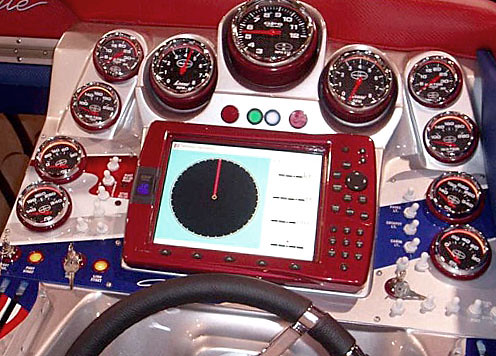
The speedometer had been working before. But somewhere along the line, I must have got something in the pitot tube back on the transom, and it was no longer working. No flow, no water pressure, and nothing for the speedometer to measure. An attempt at cleaning it out the following week had no effect, and I resigned myself to the fact that I'd have to replace the pitot..eventually. An easy job, to be sure, but an annoyance, just the same. Of course if I had an instrument panel like the one pictured on the rig below, I wouldn't have to bother with this stuff; I'd have a fancy GPS speedometer that would be far less likely to go bad and a lot more accurate.

PHOTO CREDIT: Cigarette Racing Team

Which brings me to the inexpensive, handy-dandy iPhone app I found a few months ago (not in time for boating season, though) called simply SPEED. Sadly, this GPS-based speedometer was free when I grabbed it, but is just 99 cents now, so it's well worth the price. The display is clear and legible, and it reads in both kilometers and miles per hour. Plus, if you swipe the dial vertically, it will invert the colors, which makes it nice if reflection is a problem. You'll probably have to be moving at least 5mph to get a reading, but you can rest assured that the GPS speed reading it gives you is definitely more accurate than the old-fashioned analog speedo you might have been using. There is supposedly a new, improved $1.99 version coming out soon, but if you buy now, they'll upgrade you for free.

The nice iPhone bonus is that you don't need a separate camera to "shoot" your speed reading; just hit the "menu button" and the "on/off" button on the top at the same time, and the iPhone's camera takes a screenshot. Couldn't be simpler...

Monday, February 23, 2009

Google/Nav Chart Mashup is Handy Aid in Unfamiliar Waters

Like a lot of people, I can't really swing a nice GPS navigation and charting system for my boat; good ones aren't cheap, and I don't really want to cram one onto the helm of my modest 26' Formula. But there is an alternative route if you are navigating in unfamiliar waters and don't want to carry around a lot of paper charts.

This Google/Nav Chart Mashup is very handy. What they've done is overlay NOAA navigation charts over the interactive, zoomable Google map. You can search it by just entering a location (like "Put in Bay, OH") just as you would on any other Google map, and click--you're right there. Sliders allow you to adjust the transparency of the overlay, and you can also switch between satellite view and map views. The site covers all U.S. coastal waters and the Great Lakes.


Some caveats: The site seems to work fine on a laptop--of course you'd need G3 wireless service to use it; otherwise, I suppose you could save and pre-load screen shots as images to save as chart files for offline viewing. I was really hoping to see how this works on the iPhone--which would be wonderfully compact and really handy--but it seemed slow, and the zoom is hard to use on the touch-screen. Maybe another type of web-enabled phone [blackberry] would work better.

Nevertheless, used laptops are easy to come by, and offer added functionality over a dedicated nav-only system. Many folks keep them on their boat anyway, to use on trips; for them, this could be a handy tool.

Search [B3], Links & the web

  © Blogger templates ProBlogger Template by Ourblogtemplates.com 2008

Back to TOP